Calories Burned Rock Climbing
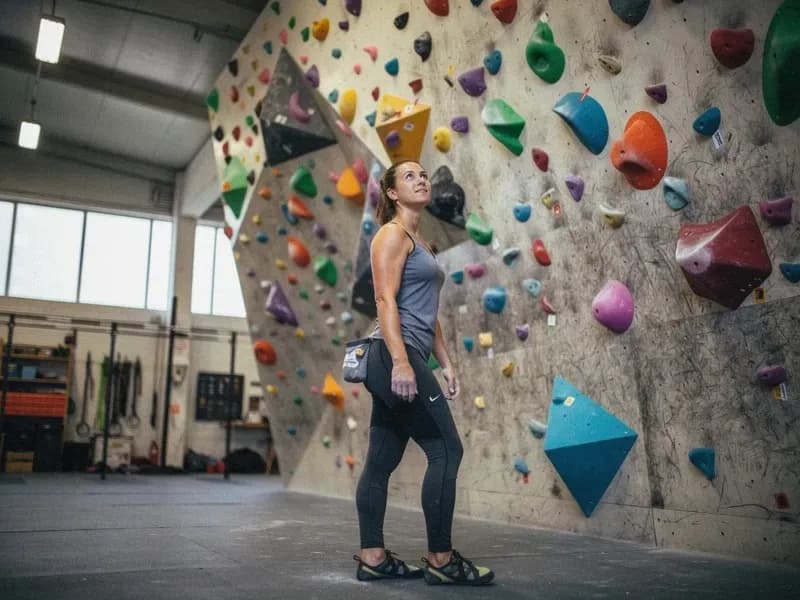
at 70 kg (154 lbs), 8 METs
Intensity
vigorous
Category
Sports
Muscles Worked
Equipment: Climbing shoes, Chalk bag, Harness and rope (for roped climbing)
Rock climbing is a demanding full-body sport that burns approximately 8.0 METs while ascending. It combines upper body pulling strength, lower body pushing power, and intense core engagement. Whether you climb outdoors on natural rock or indoors at a climbing gym, the constant muscle tension and problem-solving make rock climbing an effective calorie burner.
Rock Climbing Calorie Calculator
30 min of rock climbing at 154 lbs (70 kg)
These estimates are for informational purposes only and should not replace professional medical advice. Actual calories burned vary based on individual factors including age, fitness level, body composition, and exercise intensity. Consult a healthcare provider before starting a new exercise program.
Track Your Rock Climbing Burn
CaloBurner syncs with Apple Health to log your activity automatically.

Rock Climbing Calories Burned by Weight & Duration
| Weight | 15 min | 30 min | 45 min | 60 min |
|---|---|---|---|---|
| 55 kg (121 lbs) | 116 cal | 231 cal | 347 cal | 462 cal |
| 70 kg (154 lbs) | 147 cal | 294 cal | 441 cal | 588 cal |
| 85 kg (187 lbs) | 179 cal | 357 cal | 536 cal | 714 cal |
| 100 kg (220 lbs) | 210 cal | 420 cal | 630 cal | 840 cal |
Calculated using the MET formula: calories = MET x weight (kg) x 3.5 / 200 x duration (min). MET value: 8 (Compendium of Physical Activities, Ainsworth et al. 2011).
Burn Off Your Meal with Rock Climbing
Chipotle Chicken Bowl
680 cal
69 min of rock climbing
Subway Meatball Marinara
570 cal
58 min of rock climbing
McDonald's Big Mac
580 cal
59 min of rock climbing
Chick-fil-A Waffle Fries
420 cal
43 min of rock climbing
Estimates for a 70 kg (154 lb) person.
Rock Climbing for Calorie Burning
The calories burned rock climbing reflect one of the most physically complete workouts available, as it engages nearly every major muscle group simultaneously. The act of ascending a wall or rock face requires pulling with your arms and back, pushing with your legs, and stabilizing with your core, all while maintaining grip strength and body positioning. A 70 kg (154 lb) climber burns approximately 588 calories per hour of active climbing.
The calorie burn in rock climbing depends on the style and difficulty. Bouldering (short, intense problems without ropes) involves explosive movements and burns calories at a rate similar to or higher than the 8.0 MET average. Top-rope climbing on longer routes provides more sustained effort over extended periods. Rest time between climbs reduces the average hourly burn, so climbers who minimize rest and climb continuously will burn closer to the 588 calorie per hour estimate.
Beyond calorie burn, rock climbing builds exceptional grip strength, upper back development, and forearm endurance. It also develops problem-solving skills and body awareness, as each route requires you to plan your movements and adapt in real time. Many climbers report that the mental engagement makes sessions feel shorter, allowing them to train longer than they would with conventional exercise.
For weight loss, rock climbing is highly effective. At 588 calories per hour, it burns more than hiking (441 cal/hr), weight lifting (441 cal/hr), and swimming (515 cal/hr). A 90-minute climbing gym session with 50-60 minutes of active climbing time burns roughly 440-588 calories for a 70 kg person. That is about the same as a Chick-fil-A Waffle Fries and a drink combined. Training three times per week adds up to over 1,300-1,700 calories of expenditure from climbing alone, creating a meaningful weekly deficit.
Beginners should start at an indoor climbing gym, where routes are graded by difficulty and safety systems are in place. Most gyms offer introductory classes that teach basic movement, belaying, and safety. A common mistake for new climbers is over-gripping the holds, which exhausts your forearms within minutes and shortens your session. Focus on keeping a relaxed grip and using your legs to push upward rather than pulling with your arms. Your legs contain much larger muscles and fatigue far more slowly.
Another mistake that reduces calorie burn is taking long rests between climbs. While some recovery is necessary, sitting on a bench for 10 minutes between routes drops your average hourly burn significantly. Aim for 2-3 minutes of rest, or use the downtime to traverse easy routes at a low level, which keeps your heart rate elevated.
To progress and increase calorie expenditure, climb more routes per session at moderate difficulty rather than projecting one hard route all night. Volume climbing at a grade below your maximum keeps your heart rate consistently high. Over time, increase the difficulty of your climbs and incorporate overhanging routes, which demand more upper body strength and core tension. Adding supplementary exercises like pull-ups and core work on rest days builds the strength to climb harder and longer.
Tips to Maximize Calorie Burn During Rock Climbing
- 1
Minimize rest between climbs to keep your heart rate elevated. Aim for no more than 2-3 minutes of rest between routes.
- 2
Climb with your legs, not your arms. Pushing with your legs is more energy-efficient and engages your larger muscle groups for higher calorie burn.
- 3
Try bouldering sessions for higher intensity. Short, powerful problems keep your heart rate spiking throughout the session.
- 4
Warm up with 10 minutes of easy traversing (climbing sideways along the wall) before attempting harder routes to prevent finger and forearm injuries.
- 5
Vary your climbing style by mixing overhangs, slabs, and vertical walls to engage different muscle groups throughout the session.
How Rock Climbing Compares
Calories per hour based on a 70 kg (154 lb) person.
Frequently Asked Questions
How many calories does one hour of rock climbing burn?
A 70 kg (154 lb) climber burns approximately 588 calories per hour of active climbing. At 90 kg (198 lb), that increases to about 756 calories per hour. Note that this is for active climbing time. A typical 90-minute gym session might include 45-60 minutes of actual climbing with rest between routes, bringing the effective burn to roughly 440-588 calories.
Is rock climbing a good workout for weight loss?
Rock climbing is excellent for weight loss. At 8.0 METs, it burns more calories per active minute than basketball (6.5 METs), soccer (7.0 METs), or tennis (7.3 METs). A 70 kg (154 lb) person climbing three times per week for one hour burns about 1,764 calories, equivalent to roughly 0.23 kg (0.5 lb) of fat loss per week without dietary changes.
Does bouldering or route climbing burn more calories?
Both styles burn similar calories per minute of active climbing, around 8.0 METs. The difference is in session structure. Bouldering involves shorter, more intense efforts with more rest between problems. Route climbing provides longer sustained effort. For maximum hourly calorie burn, focus on high-volume bouldering with short rests or continuous moderate-difficulty route climbing.
What muscles does rock climbing work the most?
Rock climbing primarily works your forearms (grip strength), lats (pulling), and biceps (arm flexion). Your core is constantly engaged for body tension and stability. Your quadriceps and calves push you upward on each move. Climbing is especially effective for building pulling strength and grip endurance, making it complementary to pushing exercises like bench press.
Can beginners burn as many calories as experienced climbers?
Beginners often burn more calories than experienced climbers on a per-route basis because less efficient technique requires more muscular effort. However, experienced climbers can sustain longer sessions and climb more routes per hour. A beginner might climb for 30-40 minutes in a session, burning 294-392 calories, while an experienced climber at 70 kg (154 lb) might climb for 60 minutes, burning closer to 588 calories.
Related Activities
Track Your Rock Climbing Calories
CaloBurner syncs with Apple Health to count your steps and estimate calories burned throughout the day. Combine your rock climbing burn data with AI-powered meal tracking for a complete picture.
Calculate your daily calorie target · Browse restaurant calories
MET values from the Compendium of Physical Activities, Ainsworth et al. 2011. Calorie estimates are approximations and vary based on individual factors including fitness level, body composition, and exercise intensity. Written by the CaloBurner team.