Calories Burned Hiking
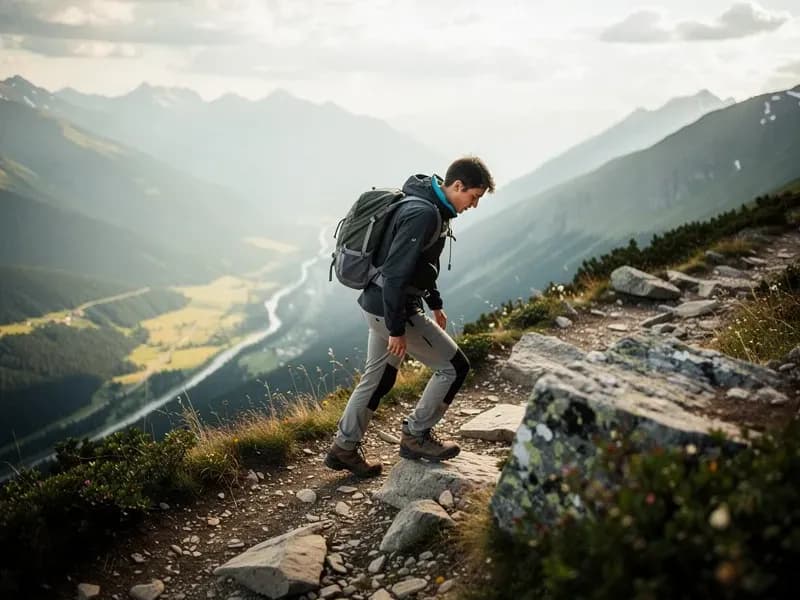
at 70 kg (154 lbs), 6 METs
Intensity
moderate
Category
Cardio
Muscles Worked
Equipment: Hiking Boots, Backpack
Hiking is a moderate-intensity outdoor activity that burns calories while letting you enjoy nature. Cross-country hiking burns approximately 6.0 METs, making it nearly twice as effective as flat-surface walking. A 70 kg (154 lb) person can burn about 441 calories per hour on the trail, with steeper terrain increasing that figure significantly.
Hiking Calorie Calculator
30 min of hiking at 154 lbs (70 kg)
These estimates are for informational purposes only and should not replace professional medical advice. Actual calories burned vary based on individual factors including age, fitness level, body composition, and exercise intensity. Consult a healthcare provider before starting a new exercise program.
Track Your Hiking Burn
CaloBurner syncs with Apple Health to log your activity automatically.

Hiking Calories Burned by Weight & Duration
| Weight | 15 min | 30 min | 45 min | 60 min |
|---|---|---|---|---|
| 55 kg (121 lbs) | 87 cal | 173 cal | 260 cal | 347 cal |
| 70 kg (154 lbs) | 110 cal | 221 cal | 331 cal | 441 cal |
| 85 kg (187 lbs) | 134 cal | 268 cal | 402 cal | 536 cal |
| 100 kg (220 lbs) | 158 cal | 315 cal | 473 cal | 630 cal |
Calculated using the MET formula: calories = MET x weight (kg) x 3.5 / 200 x duration (min). MET value: 6 (Compendium of Physical Activities, Ainsworth et al. 2011).
Burn Off Your Meal with Hiking
Subway Meatball Marinara
570 cal
78 min of hiking
Chick-fil-A Chicken Sandwich
420 cal
57 min of hiking
McDonald's Big Mac
580 cal
79 min of hiking
Estimates for a 70 kg (154 lb) person.
Hiking for Calorie Burning
The calories burned hiking reflect the combined challenge of sustained cardiovascular walking, uneven terrain, elevation changes, and often a loaded backpack. At 6.0 METs, cross-country hiking burns approximately 441 calories per hour for a 70 kg (154 lb) person, which is roughly 72% more than brisk flat-surface walking.
Terrain and elevation have a major impact on calorie burn while hiking. Ascending steep trails can push the MET value to 8.0 or higher, while carrying a 9 kg (20 lb) backpack adds another 10-15% to your total burn. A 85 kg (187 lb) hiker burns roughly 536 calories per hour on moderate terrain, and a 55 kg (121 lb) hiker burns about 347 calories.
Hiking offers mental health benefits that gym workouts cannot replicate. Studies show that spending time in nature reduces cortisol levels, improves mood, and enhances focus. The varied terrain also challenges your balance and engages stabilizer muscles that flat-surface exercise misses. Weekend hikes of 8 to 16 km (5 to 10 miles) can burn 800 to 1,600 calories in a single outing while enjoying the outdoors.
As a weight loss tool, hiking sits in a productive middle ground. It burns significantly more than golf (316 cal/hr) or elliptical training (368 cal/hr), while remaining accessible to people who find running (720 cal/hr) too hard on their joints. A 2-hour Saturday hike at moderate pace burns roughly 882 calories for a 70 kg person. That is about the same as a Wendy's Baconator at 900 calories. Pairing one or two hikes per week with gym sessions creates a well-rounded calorie deficit without monotonous cardio.
Beginners should start with flat or gently rolling trails of 5-8 km (3-5 miles) and gradually add elevation. A common mistake is choosing trails that are too steep too soon, which leads to excessive fatigue and discourages consistency. Another frequent error is hiking without enough water or food, causing energy crashes that cut the session short. Bring at least 500 ml of water per hour and a snack for hikes longer than 90 minutes.
To increase calorie burn over time, progress by adding trail difficulty rather than just distance. Seek out trails with 150-300 meters (500-1,000 feet) of elevation gain per outing. Add a weighted backpack once flat trails feel easy, starting with 4.5 kg (10 lb) and increasing gradually. Trekking poles help distribute effort to your upper body on steep terrain, turning a leg-dominant exercise into more of a full-body workout. Over several months, you can build up to full-day hikes of 20+ km that burn well over 2,000 calories.
Tips to Maximize Calorie Burn During Hiking
- 1
Choose trails with elevation gain to increase calorie burn. Every 300 meters (1,000 feet) of elevation adds roughly 50-80 extra calories for a 70 kg person.
- 2
Carry a backpack with water and supplies. A 4.5-9 kg (10-20 lb) pack increases calorie burn by 10-15%.
- 3
Use trekking poles on steep terrain to engage your upper body and distribute effort across more muscle groups.
- 4
Maintain a steady pace rather than stopping frequently. Continuous movement keeps your heart rate elevated for maximum calorie burn.
- 5
Start with shorter hikes of 5-8 km (3-5 miles) and gradually increase distance and elevation as your fitness improves.
How Hiking Compares
Calories per hour based on a 70 kg (154 lb) person.
Frequently Asked Questions
How many calories does hiking burn per hour?
A 70 kg (154 lb) person hiking cross-country burns approximately 441 calories per hour. On steep uphill terrain, this can increase to 590 calories per hour or more. A heavier hiker at 90 kg (198 lb) burns about 567 calories per hour on moderate terrain. The key variables are your weight, trail steepness, pace, and whether you carry a backpack.
Does hiking burn more calories than walking?
Yes, hiking burns about 72% more calories per hour than brisk walking on flat ground. A 70 kg (154 lb) person burns roughly 441 calories per hour hiking versus 257 calories per hour walking at 5.6 km/h (3.5 mph). The difference comes from uneven terrain, elevation changes, and the additional effort of navigating trails.
How many calories does a 10 km hike burn?
A 70 kg (154 lb) person hiking 10 km (6.2 miles) on moderate terrain burns approximately 550-700 calories depending on pace and elevation. If the trail has significant uphill sections, the total can reach 800-900 calories. A 10 km hike typically takes 2 to 3 hours at a moderate pace of 4-5 km/h (2.5-3 mph).
Does carrying a backpack increase calories burned while hiking?
Yes. Carrying a 4.5 kg (10 lb) backpack increases calorie burn by approximately 5-8%, while a 9 kg (20 lb) pack increases it by 10-15%. For a 70 kg (154 lb) person on a 2-hour hike, a 9 kg pack adds roughly 90-130 extra calories burned. The added weight forces your legs and core to work harder with every step.
Related Activities
Track Your Hiking Calories
CaloBurner syncs with Apple Health to count your steps and estimate calories burned throughout the day. Combine your hiking burn data with AI-powered meal tracking for a complete picture.
Calculate your daily calorie target · Browse restaurant calories
MET values from the Compendium of Physical Activities, Ainsworth et al. 2011. Calorie estimates are approximations and vary based on individual factors including fitness level, body composition, and exercise intensity. Written by the CaloBurner team.