Calories Burned Martial Arts
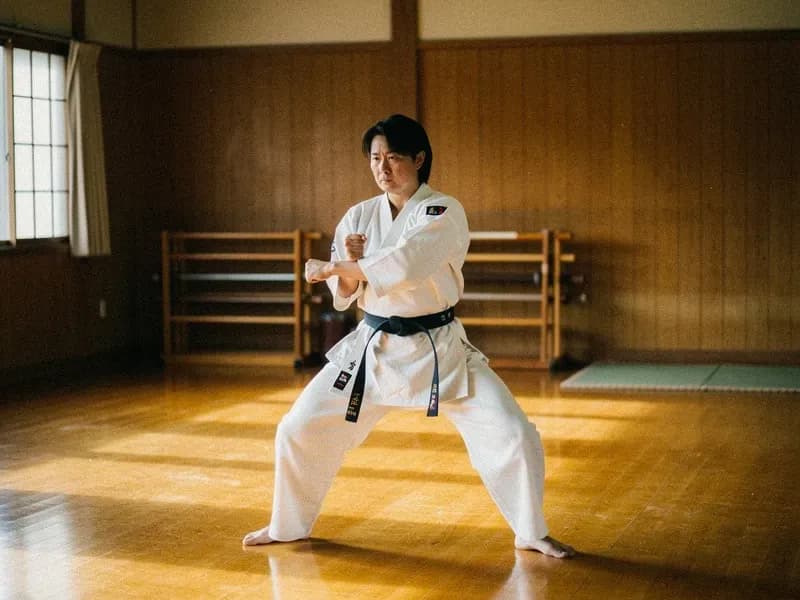
at 70 kg (154 lbs), 10.3 METs
Intensity
vigorous
Category
Sports
Muscles Worked
Equipment: Gi or training uniform (varies by discipline), Mouthguard, Protective gear (varies by discipline)
Martial arts encompass disciplines like karate, judo, taekwondo, and jiu-jitsu that deliver intense full-body workouts. General martial arts training burns approximately 10.3 METs. The combination of striking, grappling, and dynamic movement patterns makes martial arts one of the most effective activities for burning calories while building functional strength and flexibility.
Martial Arts Calorie Calculator
30 min of martial arts at 154 lbs (70 kg)
These estimates are for informational purposes only and should not replace professional medical advice. Actual calories burned vary based on individual factors including age, fitness level, body composition, and exercise intensity. Consult a healthcare provider before starting a new exercise program.
Track Your Martial Arts Burn
CaloBurner syncs with Apple Health to log your activity automatically.

Martial Arts Calories Burned by Weight & Duration
| Weight | 15 min | 30 min | 45 min | 60 min |
|---|---|---|---|---|
| 55 kg (121 lbs) | 149 cal | 297 cal | 446 cal | 595 cal |
| 70 kg (154 lbs) | 189 cal | 379 cal | 568 cal | 757 cal |
| 85 kg (187 lbs) | 230 cal | 460 cal | 689 cal | 919 cal |
| 100 kg (220 lbs) | 270 cal | 541 cal | 811 cal | 1082 cal |
Calculated using the MET formula: calories = MET x weight (kg) x 3.5 / 200 x duration (min). MET value: 10.3 (Compendium of Physical Activities, Ainsworth et al. 2011).
Burn Off Your Meal with Martial Arts
Chipotle Burrito
1110 cal
88 min of martial arts
Wendy's Baconator
900 cal
71 min of martial arts
McDonald's Big Mac
580 cal
46 min of martial arts
Subway Meatball Marinara
570 cal
45 min of martial arts
Estimates for a 70 kg (154 lb) person.
Martial Arts for Calorie Burning
Rated at 10.3 METs, the calories burned martial arts training demands are among the highest of any workout format. This category includes striking arts (karate, taekwondo), grappling arts (judo, jiu-jitsu), and mixed martial arts, all of which provide exceptional calorie burn. A 70 kg (154 lb) practitioner burns approximately 757 calories per hour during a training session.
The high calorie expenditure in martial arts comes from the total-body nature of the movements. Striking drills engage the shoulders, core, and legs in rapid succession. Grappling and throwing techniques require full-body strength, balance, and explosive power. Sparring sessions are particularly demanding because they combine technique, reaction time, and sustained physical effort in unpredictable patterns. Most martial arts classes alternate between technique drills, partner exercises, and conditioning, creating a natural interval structure.
Beyond calorie burn, martial arts develop flexibility, coordination, and mental discipline. The structured belt or ranking systems provide built-in motivation and progression. Many practitioners report improved confidence, reduced stress, and better body awareness. Training 3-4 times per week at 757 calories per session creates one of the highest weekly calorie deficits of any recreational activity.
For weight loss, martial arts is among the top-tier options. At 757 calories per hour, it matches kickboxing and outpaces boxing (573 cal/hr), swimming (515 cal/hr), and cycling (551 cal/hr). A 60-minute training session for a 70 kg person burns roughly the same calories as a McDonald's Big Mac and a side of fries combined (about 900 calories at vigorous intensity). The variety of movements also means your body is less likely to adapt and plateau compared to repetitive activities like running or cycling.
Beginners should choose a discipline that matches their goals. Striking arts like karate and taekwondo emphasize speed and agility. Grappling arts like judo and Brazilian jiu-jitsu focus on ground control and leverage. Both burn similar calories during active training. A common beginner mistake is going too hard in sparring sessions before developing proper technique. This leads to injuries and burnout. Most schools recommend at least 2-3 months of technique drilling before regular sparring.
Another mistake that reduces calorie burn is standing idle during class. When your partner is drilling a technique, stay active by shadowboxing, practicing footwork, or doing bodyweight exercises. Active rest between drills keeps your heart rate elevated and adds 10-15% to your total session burn.
To progress over time, increase training frequency before intensity. Moving from two to four sessions per week doubles your weekly calorie expenditure. Once your conditioning improves, longer sparring rounds and competition preparation will push your output higher. Supplementing martial arts with jump rope (904 cal/hr) or running (720 cal/hr) on off days builds the cardiovascular base you need for sustained high-intensity training.
Tips to Maximize Calorie Burn During Martial Arts
- 1
Participate actively in every drill and partner exercise rather than standing idle between turns. Continuous movement maximizes calorie burn.
- 2
Focus on explosive hip rotation in strikes and throws to engage your core and glutes for maximum power and calorie expenditure.
- 3
Supplement class training with solo practice of forms or kata at home. Even 15 minutes of practice burns roughly 190 calories at 70 kg (154 lb).
- 4
Train at least 3 times per week to build enough conditioning for longer, more intense sessions as your fitness improves.
- 5
Include grappling rounds in your training when possible. Ground work is especially demanding and keeps your heart rate in the vigorous zone.
How Martial Arts Compares
Calories per hour based on a 70 kg (154 lb) person.
Frequently Asked Questions
How many calories does one hour of martial arts burn?
A 70 kg (154 lb) person burns approximately 757 calories per hour of general martial arts training. At 90 kg (198 lb), that increases to about 973 calories per hour. The exact burn varies by discipline. High-intensity sparring burns at the top of this range, while technique drilling at lower intensity may burn 10-15% less.
Which martial art burns the most calories?
Most martial arts burn similar calories at roughly 10.3 METs during active training. The highest calorie burn comes from disciplines with the most continuous movement. Mixed martial arts (MMA), muay thai, and taekwondo tend to be the most physically demanding per session. Tai chi is the exception, burning only about 3.0-4.0 METs due to its slow, meditative pace.
Is martial arts good for weight loss?
Martial arts is one of the most effective activities for weight loss. At 10.3 METs, a 70 kg (154 lb) person training 3 times per week for one hour burns 2,271 calories weekly from training alone. That is equivalent to roughly 0.29 kg (0.65 lb) of fat loss per week without dietary changes, or about 1.3 kg (2.8 lb) per month.
How does martial arts compare to gym workouts for calorie burn?
Martial arts at 10.3 METs burns significantly more calories per hour than weight lifting (6.0 METs), elliptical (5.0 METs), or even cycling (7.5 METs). For a 70 kg (154 lb) person, martial arts burns 757 calories per hour compared to 441 for weight lifting and 551 for cycling. The full-body engagement and high intensity drive the difference.
Can beginners do martial arts for fitness?
Absolutely. Most martial arts schools welcome beginners of all fitness levels. Initial classes focus on basic techniques and conditioning. Expect to burn fewer calories in early sessions (roughly 500-600 calories per hour at 70 kg / 154 lb) as you learn movements. Within 4-8 weeks of consistent training, most beginners reach the full 757 calorie per hour intensity level.
Related Activities
Track Your Martial Arts Calories
CaloBurner syncs with Apple Health to count your steps and estimate calories burned throughout the day. Combine your martial arts burn data with AI-powered meal tracking for a complete picture.
Calculate your daily calorie target · Browse restaurant calories
MET values from the Compendium of Physical Activities, Ainsworth et al. 2011. Calorie estimates are approximations and vary based on individual factors including fitness level, body composition, and exercise intensity. Written by the CaloBurner team.