Calories Burned Skiing
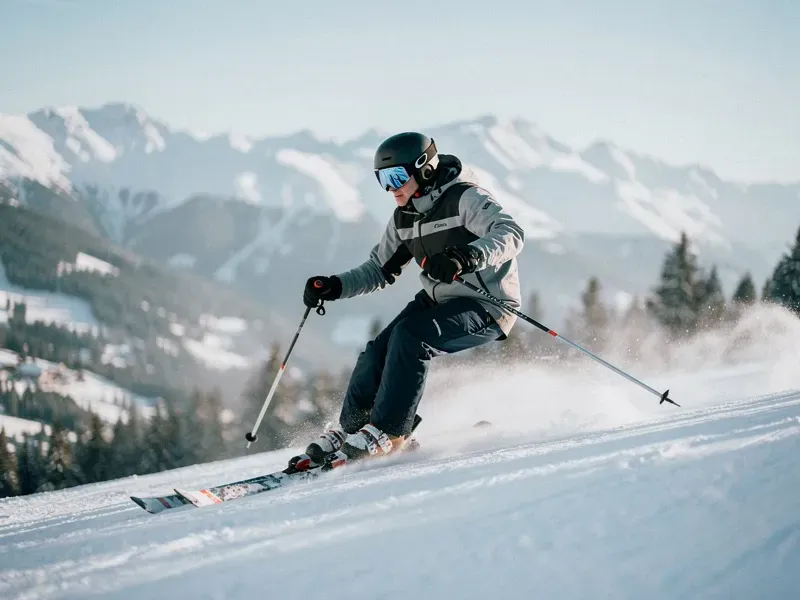
at 70 kg (154 lbs), 7 METs
Intensity
vigorous
Category
Sports
Muscles Worked
Equipment: Skis, Ski boots, Poles, Helmet
Skiing is a winter sport that provides a vigorous full-body workout while navigating slopes. Downhill skiing at moderate effort burns approximately 7.0 METs. The combination of sustained leg work, balance control, and cold-weather exposure makes skiing one of the most effective calorie-burning recreational activities available during the winter months.
Skiing Calorie Calculator
30 min of skiing at 154 lbs (70 kg)
These estimates are for informational purposes only and should not replace professional medical advice. Actual calories burned vary based on individual factors including age, fitness level, body composition, and exercise intensity. Consult a healthcare provider before starting a new exercise program.
Track Your Skiing Burn
CaloBurner syncs with Apple Health to log your activity automatically.

Skiing Calories Burned by Weight & Duration
| Weight | 15 min | 30 min | 45 min | 60 min |
|---|---|---|---|---|
| 55 kg (121 lbs) | 101 cal | 202 cal | 303 cal | 404 cal |
| 70 kg (154 lbs) | 129 cal | 257 cal | 386 cal | 515 cal |
| 85 kg (187 lbs) | 156 cal | 312 cal | 469 cal | 625 cal |
| 100 kg (220 lbs) | 184 cal | 368 cal | 551 cal | 735 cal |
Calculated using the MET formula: calories = MET x weight (kg) x 3.5 / 200 x duration (min). MET value: 7 (Compendium of Physical Activities, Ainsworth et al. 2011).
Burn Off Your Meal with Skiing
Panera Broccoli Cheddar Soup
910 cal
106 min of skiing
McDonald's Quarter Pounder
520 cal
61 min of skiing
Wendy's Frosty
390 cal
45 min of skiing
Five Guys Fries
953 cal
111 min of skiing
Estimates for a 70 kg (154 lb) person.
Skiing for Calorie Burning
The calories burned skiing reflect a demanding full-body sport, as every run requires sustained muscle tension while navigating downhill terrain. The constant isometric contraction of your quadriceps and glutes to maintain your stance, combined with active turning and edge control, keeps your muscles under tension throughout each run. A 70 kg (154 lb) skier burns approximately 515 calories per hour of active skiing at moderate effort.
The calorie burn from skiing varies based on several factors. Steeper terrain and aggressive carving increase intensity, while gentle groomed runs require less effort. The cold environment also contributes to calorie expenditure, as your body burns additional energy to maintain its core temperature. Studies suggest that cold exposure during winter sports can increase total calorie burn by 5-10% compared to the same exercise in moderate temperatures.
Skiing also provides significant lower body conditioning. The sustained squat position strengthens your quadriceps, hamstrings, and glutes, while the rotational movements of turning engage your obliques and hip stabilizers. The balance demands improve proprioception and ankle stability. A full day of skiing (4-6 hours of active time) can burn 2,000-3,000 calories for a 70 kg (154 lb) person, making it one of the highest total-burn activities for a single day.
When compared to other calorie-burning activities, skiing holds its own. At 515 calories per hour, it matches swimming and soccer (both 515 cal/hr) and burns nearly twice as much as walking (257 cal/hr). It trails running (720 cal/hr), but a full ski day of 4 to 6 hours produces a far greater total burn than most people achieve with a single gym session. To put it in perspective, one hour of skiing burns roughly the equivalent of a Wendy's Frosty at 390 calories.
Beginners can maximize their calorie burn by focusing on proper form from the start. Keep your weight centered over your skis with knees bent and hands forward. A common mistake is leaning back on the skis, which reduces control, forces your quadriceps into an inefficient position, and actually lowers the overall intensity of the workout. Another mistake is spending too much time in the lodge between runs. Aim to keep rest periods short and maximize your time on the slopes.
To progress and burn more calories over time, gradually move from groomed green runs to steeper blue and black terrain. Steeper slopes demand more muscular effort per turn, increasing both the MET intensity and overall burn. Mogul skiing and tree runs add explosive directional changes that spike your heart rate well above the levels you reach on smooth groomers. Off-season training with squats, lunges, and wall sits helps build the leg endurance needed to ski longer and harder, directly increasing how many calories you burn per day on the mountain.
Tips to Maximize Calorie Burn During Skiing
- 1
Choose steeper runs and practice aggressive carving turns to increase intensity and calorie burn by 20-30% compared to gentle cruising.
- 2
Minimize time on the chairlift by choosing shorter runs with quicker turnaround to maximize active skiing time per hour.
- 3
Maintain a low, athletic stance with knees bent at roughly 90 degrees to keep your quadriceps and glutes under constant tension.
- 4
Take fewer breaks during the day. Skiing 4-5 hours of active time instead of 3 can add 500+ extra calories of burn.
- 5
Try mogul skiing or tree runs to add explosive leg work and rapid directional changes that elevate your heart rate above groomed-run levels.
How Skiing Compares
Calories per hour based on a 70 kg (154 lb) person.
Frequently Asked Questions
How many calories does a full day of skiing burn?
A 70 kg (154 lb) skier who actively skis for 4-6 hours burns approximately 2,060 to 3,090 calories in a full day. At 90 kg (198 lb), that increases to 2,646 to 3,969 calories. Actual burn depends on terrain difficulty, rest time between runs, and weather conditions. Cold temperatures can increase burn by 5-10%.
How many calories does one hour of skiing burn?
A 70 kg (154 lb) person burns approximately 515 calories per hour of active downhill skiing at moderate effort. At 90 kg (198 lb), that increases to about 661 calories per hour. These estimates are for time spent actually skiing, not including chairlift rides or breaks at the lodge.
Does skiing burn more calories than snowboarding?
Skiing and snowboarding burn comparable calories at moderate effort. Skiing is rated at 7.0 METs while snowboarding is approximately 5.3 METs. For a 70 kg (154 lb) person, that is 515 calories per hour for skiing versus 389 for snowboarding. Skiing tends to burn more because both legs work independently and the sustained squat position is more demanding.
Do cold temperatures increase calorie burn while skiing?
Yes. Research shows that exercising in cold conditions increases calorie expenditure by 5-10% compared to the same activity in moderate temperatures. Your body burns additional energy to maintain its core temperature of 37 degrees C (98.6 degrees F). However, heavy insulating clothing reduces this effect, so the net increase while skiing is modest.
What muscles does skiing work the most?
Skiing primarily works the quadriceps, which remain under constant isometric tension throughout each run. Your hamstrings and glutes stabilize your stance and absorb terrain changes. Your core, especially the obliques, powers rotational turns. Calves manage edge pressure and balance. After a full day of skiing, most people feel the most fatigue in their quadriceps and outer thighs.
Related Activities
Track Your Skiing Calories
CaloBurner syncs with Apple Health to count your steps and estimate calories burned throughout the day. Combine your skiing burn data with AI-powered meal tracking for a complete picture.
Calculate your daily calorie target · Browse restaurant calories
MET values from the Compendium of Physical Activities, Ainsworth et al. 2011. Calorie estimates are approximations and vary based on individual factors including fitness level, body composition, and exercise intensity. Written by the CaloBurner team.